Knee arthroscopy
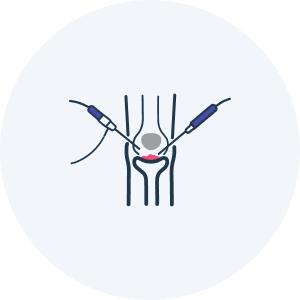
Knee arthroscopy is a minimally invasive procedure used to treat certain joint pathologies using a camera and small instruments inserted into the joint through short incisions. This technique allows the knee to be explored and various surgical procedures to be performed while limiting trauma to surrounding tissues.
Knee arthroscopy
Knee arthroscopy is a minimally invasive procedure used to treat certain joint pathologies using a camera and small instruments introduced into the knee through short incisions. This technique makes it possible to explore the knee and perform various surgical procedures while limiting trauma to the surrounding tissues.

When is knee arthroscopy necessary?
Knee arthroscopy may be indicated in cases of meniscus injury, articular foreign body, or certain cartilage disorders. It can also be used to confirm or complement the diagnosis of certain knee pathologies. However, it is not a treatment for diffuse knee osteoarthritis.
The symptoms are most often pain, locking, swelling, or discomfort during daily or athletic activities. Initially, medical treatment combining rest, rehabilitation, painkillers, or injections may be proposed. When this does not allow for sufficient improvement, surgical management may be considered.
What are the benefits of this operation?
Knee arthroscopy has several advantages related to its minimally invasive nature.
Preservation of surrounding tissues
This technique helps limit damage to the peri-articular tissues. The preservation of these structures contributes to a high-quality functional recovery and is of particular interest in young and athletic patients.
Precise visualization of the joint
The use of specific optics enables the surgeon to obtain a detailed view of the various knee structures. This exploration facilitates the identification of lesions and the performance of appropriate surgical procedures.
How is the diagnosis established?
The diagnosis is based on a specialized consultation combining a clinical examination and imaging studies, starting with X-rays.
X-rays make it possible to evaluate the bone structures of the knee. In most cases, an MRI is performed to analyze the menisci, cartilage, and ligaments.
These examinations make it possible to identify the lesions responsible for the symptoms and to determine whether arthroscopy is indicated.
What does the procedure involve?
The intervention is performed under general or local anesthesia. A miniaturized camera is inserted in the joint through a small incision and mini instruments (probe, scissors, aspiration..) by another This technique allows the surgeon to precisely explore the joint and perform the necessary maneuvers to treat the identified lesions.
Depending on the situation, the intervention may include, in particular, treating a meniscus injury (suture or partial resection), removing an articular foreign body, or performing certain maneuvers. Therapeutic on the cartilage
How does the pre-operative care take place?
Before a knee arthroscopy, a pre-operative assessment is performed to confirm the surgical indication and prepare for the procedure under the best conditions. This assessment generally includes an anesthesia consultation as well as the examinations necessary for planning the surgical procedure. Specific instructions will be given to you regarding hospitalization and the resumption of activities.
How does post-operative follow-up work?
Postoperative recovery is generally straightforward. Return to walking is most often rapid and may be allowed as early as the day of the procedure or in the days that follow depending on the procedure performed. Rehabilitation may be prescribed to recover mobility, muscle strength, and functional abilities of the knee. Return to work depends on the profession practiced: on average, between 1 and 3 weeks after the procedure.

Mandatory instructions before surgery
To guarantee the success of the procedure and minimize the risk of infection as much as possible, certain strict instructions must be followed before you are admitted to the hospital:
Smoking cessation
Since smoking massively increases the risks of infection and delayed healing, patients are strictly required to stop smoking at least one month before the procedure and for the three months that follow.
Skin preparation
The day before and the morning of the procedure, you must take a shower using an antiseptic or disinfectant soap. Please note that shaving the knee is not recommended; if hair removal is necessary, it must be done with hair clippers or a depilatory cream to avoid any micro-cuts.
Reporting allergies
You must absolutely inform your surgeon and the anesthesiologist if you have allergies to antibiotics, as well as to metals (such as nickel, chromium, or cobalt) if you have ever reacted to contact with jewelry, a watch, or a belt buckle.
The pre-operative notes
Any surgery carries the risk of difficulties or complications which, even if uncommon, must be known and taken into account in the surgical decision. Please click below to read the information corresponding to the procedures described above.
Arthroscopic meniscectomy
Meniscal repair