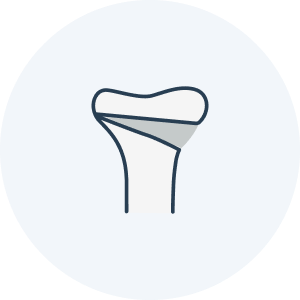
Knee osteotomy
An osteotomy is a procedure that consists of correcting the axis of the lower limb in order to modify the distribution of stress at the knee joint. It is primarily indicated for patients suffering from a lower limb deformity associated with moderate or localized osteoarthritis.
The objective is to relieve pain by altering the load on the knee, slow the progression of osteoarthritis, and postpone the need for a knee replacement.

When is a knee osteotomy necessary?
Several situations may lead one to consider a knee osteotomy.
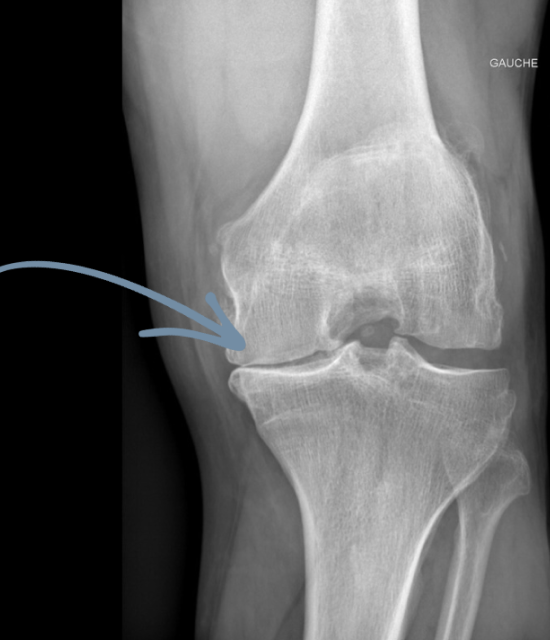
Localized knee osteoarthritis
When cartilage wear is limited to a single area of the knee, osteotomy can help preserve the still-healthy areas of the joint.
Lower limb axis deformity
A genu varum (bent legs) or genu valgum (knee in-ward) causes mechanical overload on a compartment (internal or external) of the knee. most often painful.
After failure of medical treatment
Treatment combining painkillers, anti-inflammatory drugs, corticosteroid injections, or physical therapy is generally offered as a first-line approach. When this becomes insufficient, surgery may be indicated.
How is the diagnosis established?
The diagnosis is based on a specialized consultation combining a clinical examination and radiographic assessment.
X-rays, including a full-leg radiograph, make it possible to analyze the axis of the lower limb, the location of the osteoarthritis, and the extent of the deformity. Depending on the case, additional examinations may be prescribed:
- MRI ;
- Scanner.
These examinations make it possible to precisely plan the correction to be carried out.
What does the procedure involve?
The procedure is performed under general or loco-regional anesthesia. It consists of making an asymmetric bone cut in the tibia or, more rarely, the femur in order to modify the axis of the leg. This correction makes it possible to transfer mechanical stresses to the healthiest part of the knee. The bone is then stabilized using a plate and screws to hold it in place during healing.
How does the pre-operative care take place?
Before a knee osteotomy, a comprehensive pre-operative evaluation is performed to precisely analyze the deformity and prepare for the procedure under the best possible conditions. This evaluation generally includes an anesthesia consultation as well as imaging tests to measure the axes of the lower limb.
These elements allow the surgeon to plan the bone correction to be performed and to define the most appropriate surgical strategy.
Mandatory instructions before surgery
To guarantee the success of the procedure and minimize the risk of infection as much as possible, certain strict instructions must be followed before you are admitted to the hospital:
Smoking cessation
Since smoking massively increases the risks of infection and delayed healing, patients are strictly required to stop smoking at least one month before the procedure and for the three months that follow.
Skin preparation
The day before and the morning of the procedure, you must take a shower using an antiseptic or disinfectant soap. Please note that shaving the knee is not recommended; if hair removal is necessary, it must be done with hair clippers or a depilatory cream to avoid any micro-cuts.
Reporting allergies
You must absolutely inform your surgeon and the anesthesiologist if you have allergies to antibiotics, as well as to metals (such as nickel, chromium, or cobalt) if you have ever reacted to contact with jewelry, a watch, or a belt buckle.
How does post-operative follow-up work?
Rehabilitation begins quickly after the procedure to gradually restore knee mobility. An orthopedic splint is usually worn for a few weeks as an analgesic. Support for the operated limb may be limited for the first few weeks depending on the type of osteotomy performed and the quality of the bone. It is gradually resumed and normal walking is usually achieved between 3 and 4 months after the procedure. The intervention. Driving a car depends on the ability to walk properly. Return to work takes place after 2 to 4 months, depending on whether the person is sedentary or not and on functional recovery.
Regular follow-up is necessary during the first year. The osteoarthrosis material can be removed starting from the 18th postoperative month, as it is often perceived as being bothersome. The evolution of the osteoarthritis then requires follow-up consultations with X-rays every 2 to 3 years.
The pre-operative sheet
Any surgery carries the risk of difficulties or complications which, even if uncommon, must be known and taken into account in the surgical decision. Please click below to read the information corresponding to the procedure described above.
Opening wedge high tibial osteotomy with bone graft