Knee ligament reconstruction
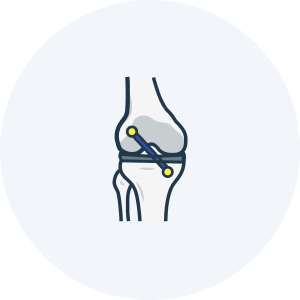
Knee ligament reconstruction consists of reconstructing a ruptured ligament, most often the anterior cruciate ligament (ACL) but also the posterior cruciate ligament (PCL) or the medial collateral ligament (MCL).
The objective is to restore joint stability, allow the resumption of daily and sports activities, and limit the risk of secondary meniscal or cartilage lesions.
Knee ligament reconstruction
Knee ligament reconstruction consists of reconstructing a ruptured ligament, most often the anterior cruciate ligament (ACL) but also the posterior cruciate ligament (PCL) or the medial collateral ligament (MCL).
The objective is to restore joint stability, allow the resumption of daily and sports activities, and limit the risk of secondary meniscal or cartilage lesions.
Anterior cruciate ligament tear and persistent knee instability
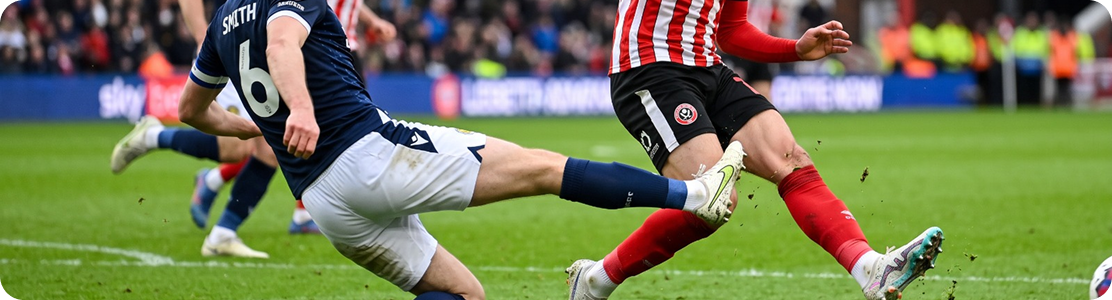
Anterior cruciate ligament tears most often occur as a result of sports trauma, during a pivot, a sudden change of direction, or a landing from a jump. It results in a loss of knee stability that can limit daily and sports activities.
After a ligament rupture, some patients experience repeated episodes of knee giving way despite functional management. This instability promotes the long-term onset of meniscal or cartilaginous lesions.
Age, as well as the patient's athletic or professional status, are important parameters for surgical decision-making, but it must be remembered that this surgery is possible at any age and at any time following the initial accident (immediately afterward or several years later).
Functional processing failure
Adapted rehabilitation is generally offered as a first-line treatment, at least to prepare for the surgery. When instability persists or the patient wishes to resume sports activities involving pivoting movements, ligamentoplasty may be indicated.
How is the diagnosis established?
The diagnosis is based on a specialized consultation combining a clinical examination and imaging workup.
X-rays make it possible to rule out an associated bone lesion. An MRI is performed to confirm the ligament rupture and to look for any meniscus or cartilage lesions. Sometimes, a CT scan or arthrogram is also necessary.
These examinations make it possible to confirm the indication for surgery and to define the most appropriate technique.
How does the pre-operative care take place?
The pre-operative assessment helps prepare for the procedure under the best conditions. It includes an anesthesia consultation as well as the examinations necessary for planning the surgery.
As far as possible, the procedure is performed on a knee that has regained good mobility and controlled inflammation thanks to pre-operative rehabilitation.
What does the intervention involve?
The procedure is performed under general or loco-regional anesthesia (spinal anesthesia), most often arthroscopically, on an outpatient basis.
The torn ligament is replaced by a graft harvested from the patient, usually from the hamstring tendons or the patellar tendon (but also from the quadriceps tendon or the fascia lata, etc.). This graft is positioned in place of the original ligament and then fixed using specific devices in order to restore knee stability.
In the event of an associated meniscus injury, it is treated during the same surgical procedure (repair or partial resection depending on the case).
Mandatory instructions before surgery
To guarantee the success of the procedure and minimize the risk of infection as much as possible, certain strict instructions must be followed before you are admitted to the hospital:
Smoking cessation
Since smoking massively increases the risks of infection and delayed healing, patients are strictly required to stop smoking at least one month before the procedure and for the three months that follow.
Skin preparation
The day before and the morning of the procedure, you must take a shower using an antiseptic or disinfectant soap. Please note that shaving the knee is not recommended; if hair removal is necessary, it must be done with hair clippers or a depilatory cream to avoid any micro-cuts.
Reporting allergies
You must absolutely inform your surgeon and the anesthesiologist if you have allergies to antibiotics, as well as to metals (such as nickel, chromium, or cobalt) if you have ever reacted to contact with jewelry, a watch, or a belt buckle.
How does post-operative follow-up work?
After a period of immobilisation of a few weeks, the resumption of daily activities is gradual and is achieved on average 30 to 45 days after the operation. Driving is possible on average 2 to 3 weeks after the surgery. After 3 months, sports in the axis (walking, cycling, swimming, simple running) can be resumed. Kinesitherapy accompanies all these stages and also helps with subsequent rehabilitation. The return to full sports activity is considered after several months (usually at least 6), depending on the recovery progress, the sport practiced and the recommendations of the surgeon. Regular follow-up allows the scarring of the graft to be assessed and the functional evolution of the knee to be monitored. It takes an average of 1 year to feel a stable and painless knee.
The pre-operative notes
Any surgery carries the risk of difficulties or complications which, even if uncommon, must be known and taken into account in the surgical decision. Please click below to read the information corresponding to the procedures described above.
Anterior cruciate ligament reconstruction using hamstring autograft (DIDT)
Anterior cruciate ligament reconstruction with patellar tendon